At some point you look in the mirror and think: my skin feels and looks a little different from a few years ago. A little less taut, a little less springy. You're not imagining it, and it isn't down to poor skincare. The leading role in this story goes to collagen, and it pays to understand what's happening and, more importantly, what you can do about it.
What collagen actually does
Collagen is the protein that gives your skin firmness and bounce, a kind of inner mattress that holds everything up and keeps it plump. As long as you have plenty of it, your skin looks taut and full. As soon as production slows, your skin becomes thinner and slowly loses some of that tension. Collagen works closely with other building blocks such as peptides, which you can read more about in what peptides do for your skin.
Why you notice it around your 30s
From around 25 to 30, your natural collagen production gradually declines, a little more each year. Around your 30s it becomes visible for the first time: fine lines that stay put, a slightly less defined contour. It's a normal process, not a failure on your part. It also explains why products that seemed fine in your twenties could now do with offering a bit more support.
What supports your skin from within
You can't turn back the clock, but you can support your skin in two ways. From the outside, ingredients such as peptides help your skin look fuller and smoother, for example through a concentrated peptide ampoule applied precisely to clean skin. This is the most direct way to feed your skin every day with the building blocks it needs.
What stimulates your skin from the outside
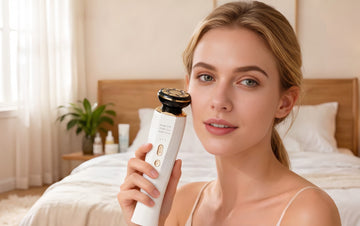
Alongside ingredients, techniques that actively stimulate your skin help too. Microcurrent activates your facial muscles and red light supports natural collagen production, as in the MicroLift Pro. You can read exactly how that works in how microcurrent works for your face. With consistent use, it makes your contour look visibly firmer.
What's realistic (and what isn't)
No product or device will give you back the skin you had in your twenties, and anyone who promises that is selling you a fairy tale. What is possible: helping your skin look its best for your age by sticking with collagen-supporting steps consistently. Consistency always beats intensity here, and a few good habits beat a drawer full of half-used jars.
In short
Your skin changes after 30 because your collagen production declines, and that's completely normal. With peptides from the outside and stimulating techniques, you can make your skin look visibly firmer and smoother, as long as you keep it up. You'll find the full picture in our guide to firmer skin without a clinic.
Frequently asked questions
Can I stop collagen loss?
Not stop it, but you can support your skin so it looks fuller and firmer. Think support, not reversal.
Do collagen supplements work?
This article is about what you put on your skin. From the outside, peptides and stimulating techniques are the most targeted support for how your skin looks.
At what age should I start?
Around 30 is a logical moment to start, because that's when production noticeably declines. Starting earlier is fine too, as preventive support.
Ingredients or a device?
They complement each other. Peptides work from within on how your skin looks, while a device stimulates from the outside. Together they get the best results.
Where to start? Combine the SilkPeptide ampoule with the MicroLift Pro.